

The landmarks of Ras Al Khaimah reflect an emirate shaped by geography, trade, and long-standing settlement. Across the region, hilltop forts, coastal towns, and mountain viewpoints reveal how communities adapted to their surroundings over the centuries.
Unlike destinations where attractions are concentrated in a single district, Ras Al Khaimah landmarks are spread across several environments. Some appear along the coastline, where fishing and maritime trade once supported entire communities.
Others sit inland near fertile ground where agriculture allowed settlements to grow. Further north, the mountains have long influenced travel routes and settlement patterns.
Read on to learn more about some of the most important Ras Al Khaimah landmarks.
Historic Landmarks of Ras Al Khaimah
Several of the most recognisable Ras Al Khaimah landmarks originate from a time when defense and trade shaped settlement planning.
Dhayah Fort remains one of the most prominent examples. Built on a steep hill in the northern part of the emirate, the fort overlooks palm groves and coastal plains below. From this elevated position, it was possible to observe activity across the surrounding land and along the coastline.
Although modest in size, the fort’s strategic location explains why it remains a defining Ras Al Khaimah landmark.
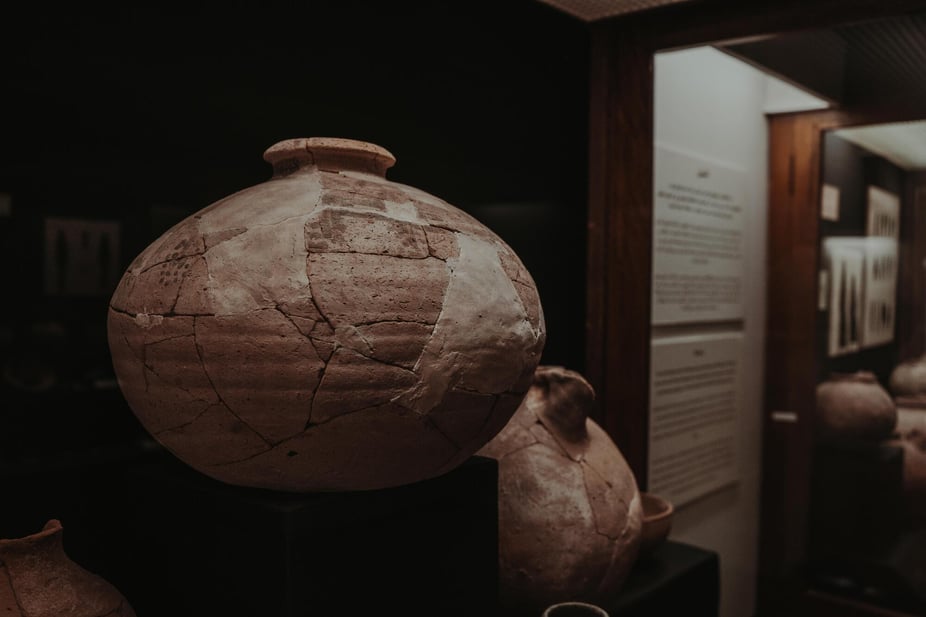
In the city, the National Museum of Ras Al Khaimah provides another important historical reference point. The museum sits within a fort that once served as the residence of the ruling family.
Inside, archaeological finds explain human occupation stretching back thousands of years. Pottery fragments, trading goods, and everyday tools show how communities here were connected to wider Gulf trading networks.
Elsewhere across the emirate, smaller watchtowers appear near farmland and older settlements. These towers once formed part of a communication network between communities.
Positioned along inland routes and agricultural areas, they allowed signals to pass quickly across the landscape. They remain meaningful Ras Al Khaimah landmarks within the historic terrain.
Julfar and Early Coastal Settlement
One of the oldest places in Ras Al Khaimah where people first settled is the historic port area of Julfar. Archaeological digs show that this coastal location was an important trading centre during the early Islamic period.
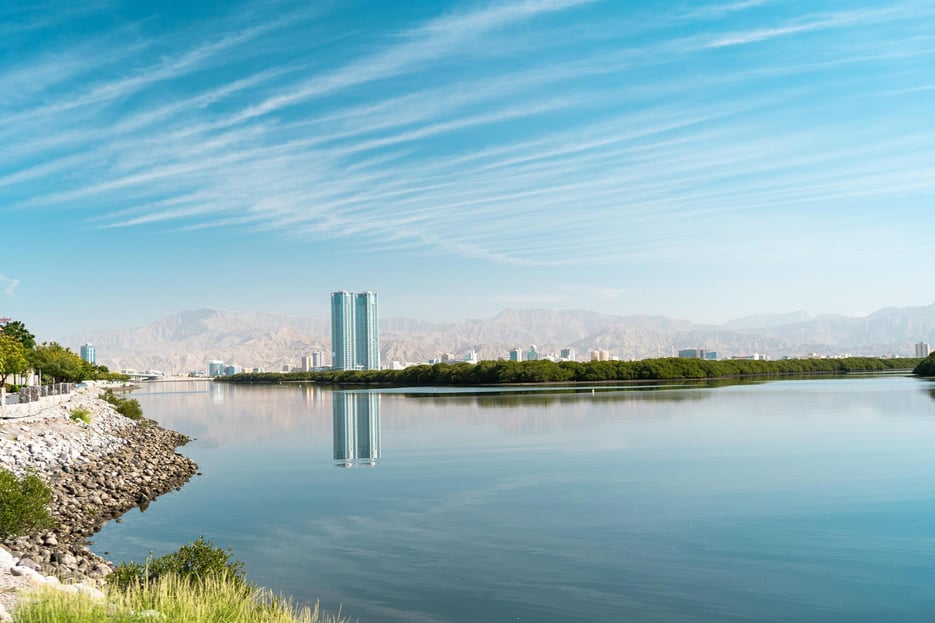
Merchants travelling between Arabia, Persia, India, and East Africa passed through this harbour and ceramics discovered at the site suggest connections with markets far beyond the Gulf. The harbour’s position allowed ships to reach major trade routes while remaining close to farmland and freshwater.
Although changes to the coastline eventually relocated the original harbour, Julfar remains an important reference point when discussing Ras Al Khaimah landmarks. Findings show that the port supported shipbuilding, pearling, and regional trade for centuries, linking with markets across the Indian Ocean.
Archaeological Sites and Early Settlements
While forts and coastal towns are among the most recognisable landmarks of Ras Al Khaimah, the emirate’s history stretches much further back through a network of archaeological sites across the northern region.
One of the most significant areas is Shimal, located north of Ras Al Khaimah city. Work here has uncovered hundreds of ancient tombs dating back to the Bronze Age, along with signs of early settlements. Pottery pieces, stone graves, and simple tools indicate that communities inhabited this region thousands of years ago and were already connected to early trading networks across the Arabian Peninsula.
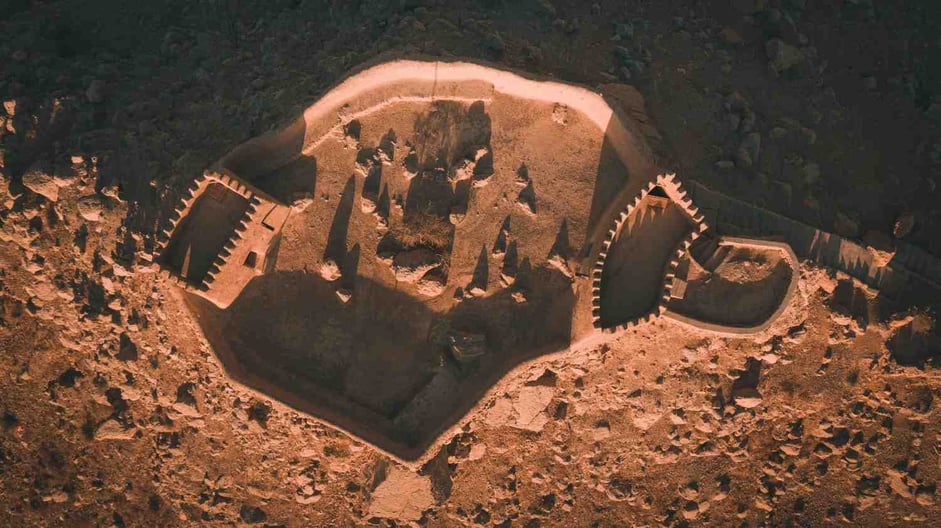
Other archaeological sites across the emirate also help to tell the story of early settlement. Discoveries in places such as Wadi Shah and nearby valleys have also revealed burial sites and everyday objects that show how people lived long before coastal ports became active trading centres.
Although many of these locations are protected research sites rather than tourist attractions, they remain important Ras Al Khaimah landmarks from a historical perspective. They show that the emirate’s development began long before forts or maritime trade dominated the landscape.
Coastal Communities and Maritime Heritage
The coastline continues to shape several of the best places in Ras Al Khaimah connected to traditional livelihoods. Fishing settlements near Al Rams provide insight into maritime practices that have supported communities here for generations.
Wooden dhows are still built and maintained in parts of the emirate using traditional techniques passed down through families of boat builders. While these boats may appear simple at first glance, they are an important part of the region’s maritime heritage. Their continued use is a reminder of how closely coastal communities were tied to trade across the Gulf.
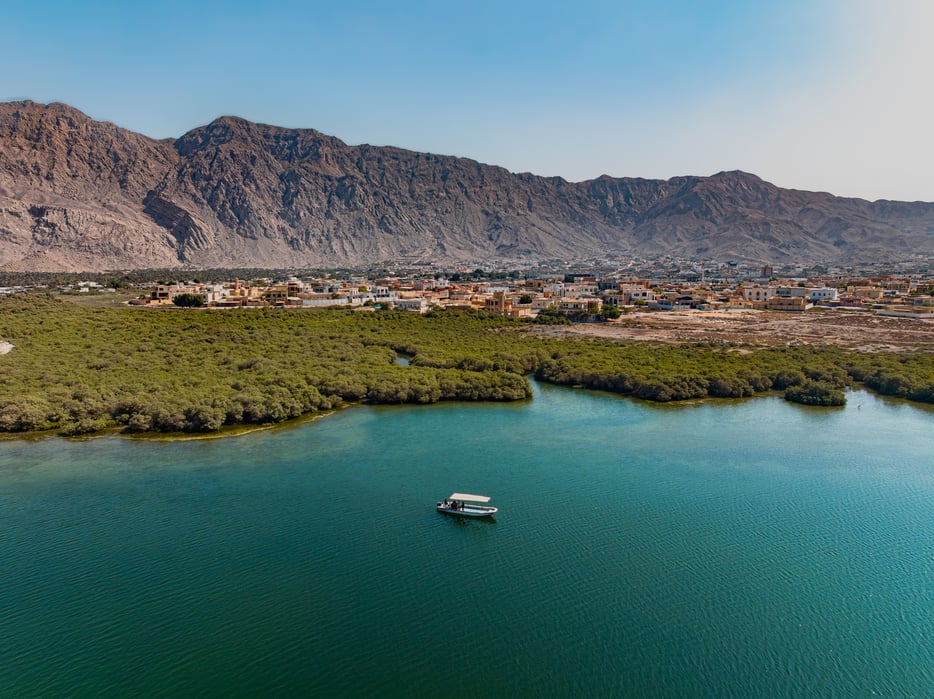
Nearby mosques along the shoreline are also quieter Ras Al Khaimah landmarks. Their simple design shows the practical building methods used by earlier communities. These mosques were built for everyday use by people whose lives centred around fishing and coastal trade.
Together, these locations show that famous landmarks in Ras Al Khaimah are not limited to forts or historic buildings, but also include places connected to the emirate’s maritime traditions.
Jebel Jais as a Natural Landmark
Among the most visible Ras Al Khaimah landmarks is Jebel Jais, the highest mountain in the United Arab Emirates. Rising within the Hajar Mountains, it has become one of the most recognisable natural features in the emirate and one of the best places in Ras Al Khaimah to experience the mountain landscape.
Viewing areas along the mountain route allow visitors to stop and take in the surrounding ridgelines and valleys.
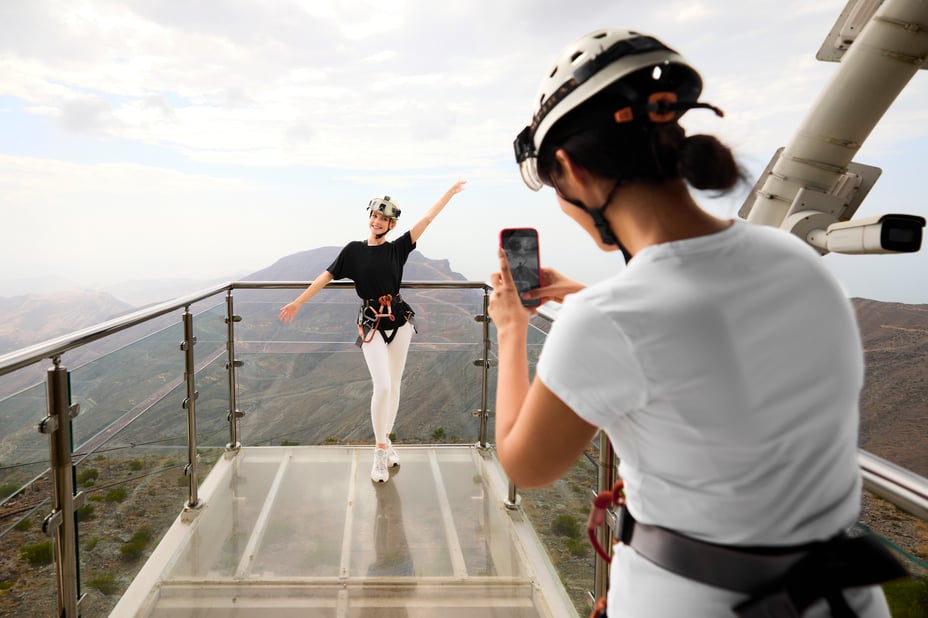
Jebel Jais is also home to several well-known attractions. The Jebel Jais Zipline, often referred to as Jais Flight, runs across one of the high mountain valleys and is the longest zipline in the world. Riders launch from an elevated platform and travel across the landscape suspended high above the terrain.
Further along the mountain route, the Jais Sledder offers another way to experience the mountain. The toboggan-style ride follows a winding rail track along the hillside, allowing visitors to control their speed as they descend through a series of curves.
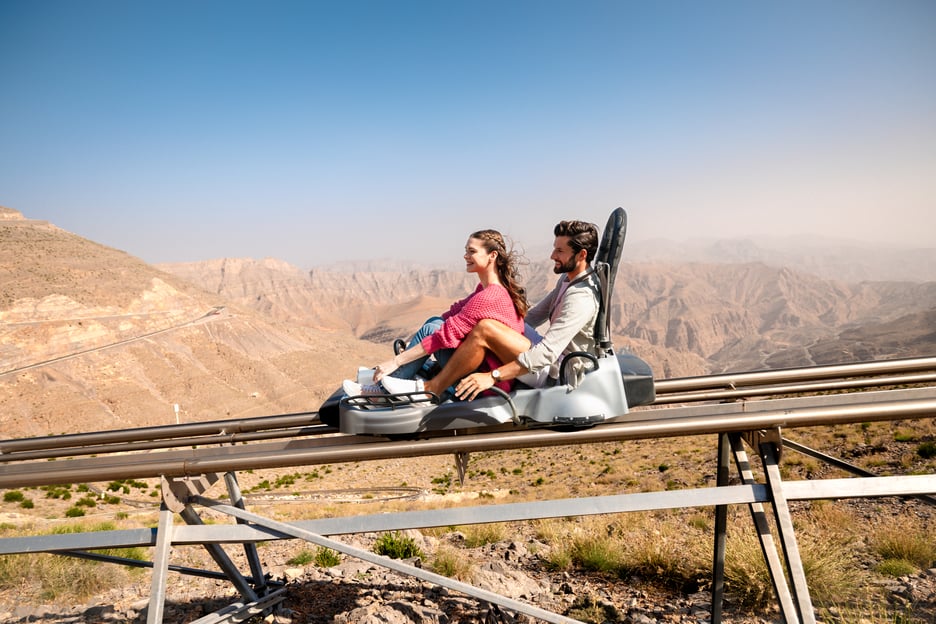
The mountain is also home to Bear Grylls Explorers Camp, where visitors, schools, and corporate groups take part in guided outdoor activities focused on practical survival skills and mountain-based challenges.
Long before these attractions existed, traders, shepherds, and farmers travelled through the Hajar range using narrow paths that connected inland valleys with coastal settlements. Some traces of these earlier communities remain visible today in the form of stone terraces and abandoned structures.
Modern Landmarks of Ras Al Khaimah
While many Ras Al Khaimah landmarks signify the emirate’s long history, several modern developments have also become recognisable reference points.
One example is Al Marjan Island, a collection of man-made islands off the coast. The development has transformed this part of the coastline into a major leisure and resort area, with waterfront hotels, promenades, and public beaches.
Another well-known location is Al Jazirah Al Hamra, a restored heritage village south of Ras Al Khaimah city. Often described as one of the best-preserved historic settlements in the country, the village features coral-stone buildings and traditional structures that reflect daily life before the oil era.
The area is also home to the RAK Art Foundation, which hosts exhibitions, artist residencies, and cultural events within the restored village environment.
Together, these sites show how landmarks in Ras Al Khaimah now include both historic heritage and more recent cultural and coastal developments.
Cultural Landmarks Beyond Architecture
Some of the most meaningful places in Ras Al Khaimah are not defined by walls or towers, but by the activities that once took place there.
Date farms across the northern and inland parts of the emirate illustrate how agriculture supported local communities for generations. Irrigation channels and shaded groves allowed crops to grow despite the dry climate, providing food and trade goods for surrounding settlements.
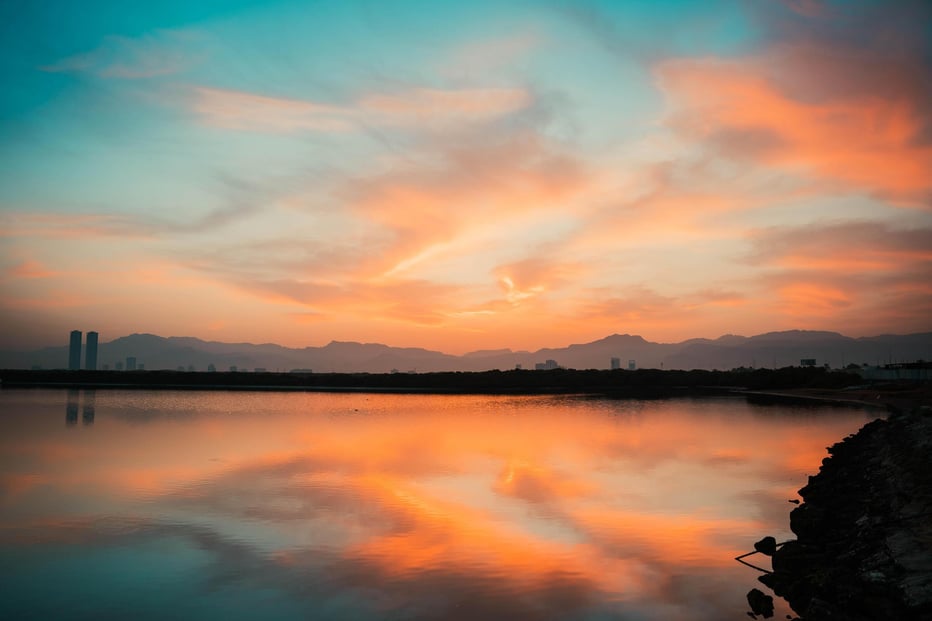
Although these farms may not appear on typical lists of Ras Al Khaimah landmarks, they remain an important part of the emirate’s heritage. Their presence explains why settlements developed in valleys where water and fertile soil were available.
Even today, these agricultural landscapes continue to shape rural places in Ras Al Khaimah.
Exploring Ras Al Khaimah Landmarks
Landmarks of Ras Al Khaimah are spread across different environments, exploring them is often easiest when planned by area.
Northern coastal sites such as Dhayah Fort and Al Rams can be visited within the same route. The National Museum and nearby historic districts are best explored while spending time in Ras Al Khaimah city.
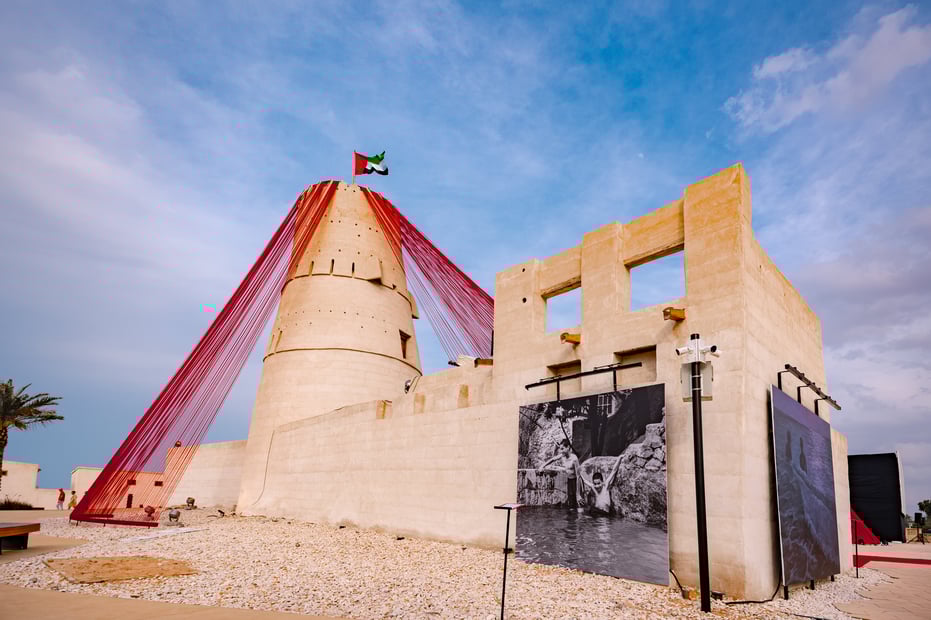
A separate visit is often dedicated to the mountain region, where travellers can experience one of the most recognisable Ras Al Khaimah landmarks in the emirate.
Between October and April, cooler weather makes outdoor exploration more comfortable. During Ramadan, operational hours for museums and heritage sites may change slightly, so checking schedules in advance can help with planning.

